
How insurance comparison works in Germany
Comparing health insurance in Germany means more than plugging numbers into a portal. The country runs a dual system of statutory public insurance (Gesetzliche Krankenversicherung, or GKV) and private insurance (Private Krankenversicherung, or PKV), and which system you can access depends entirely on your employment type, income, and residency status. Getting that distinction right is the first step in any meaningful comparison.
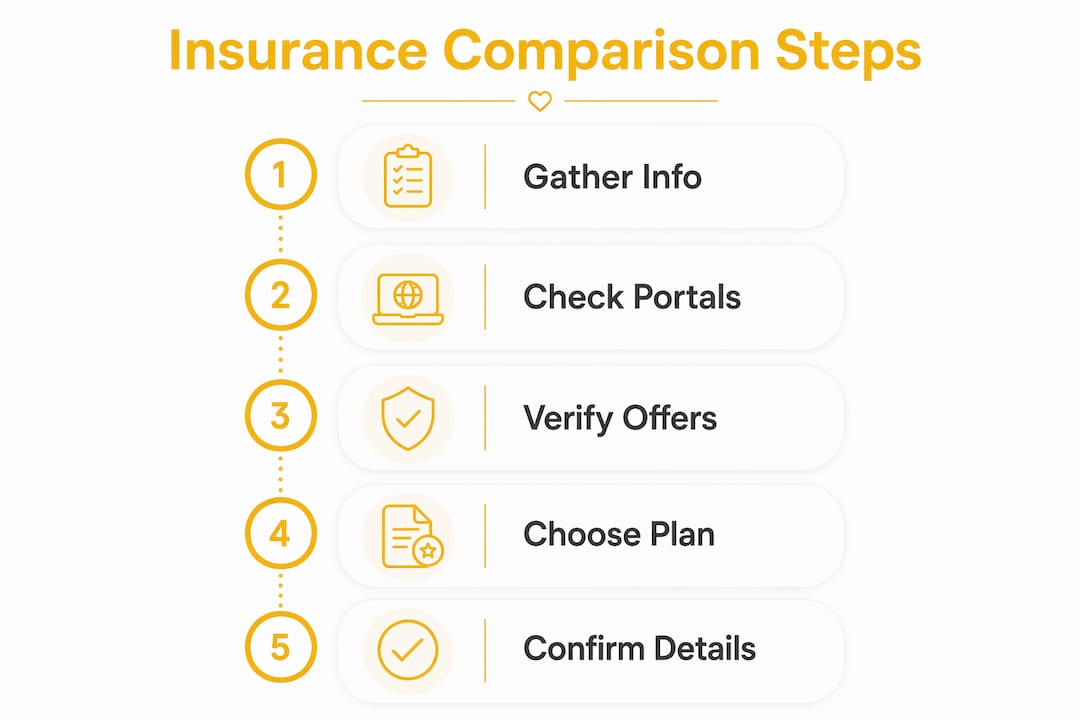
Here is what the process involves at a glance:
- Determine your eligibility for GKV or PKV based on employment status and income
- Gather personal and financial data to receive accurate, tailored quotes
- Use multiple comparison portals rather than relying on a single platform
- Cross-check results against direct insurer websites for complete market coverage
- Verify insurer credentials through BaFin, Germany's financial regulator
- Assess plan specifics including premiums, deductibles, co-payments, and coverage scope
Statutory health insurance covers roughly 90% of residents in Germany, with income-based contributions split between employer and employee. Private insurance is available to the self-employed, civil servants, and employees who earn above the annual income threshold.
Table of Contents
- What documents and personal details do you need for accurate quotes?
- Common pitfalls when using German insurance comparison portals
- How to verify offers and choose the right plan with confidence
- How Myhealthcarebroker helps you compare insurance in plain English
- How to use German insurance comparison websites step by step
- How pre-existing conditions affect your insurance comparison results
- Independent English-language advice on German health insurance
- Key Takeaways
What documents and personal details do you need for accurate quotes?
Precise data entry is what separates a useful quote from a useless one. Insurers and comparison portals calculate premiums based on your individual risk profile, so vague or incomplete inputs produce figures that won't reflect your real costs.
You will typically need:
- Gross monthly salary — for GKV, contributions are calculated as a percentage of this figure and split equally between you and your employer
- Employment status — employee, self-employed, civil servant, student, or freelancer
- Age and date of birth — private insurers weight premiums heavily on age at entry
- Residency status — whether you hold a permanent residence permit, a temporary visa, or EU citizenship affects eligibility
- Current health status and pre-existing conditions — required for PKV applications
- Nationality — relevant for some expat-specific plan categories
- Number of dependents — family members can be co-insured under GKV at no extra cost, which does not apply to PKV
Under EU GDPR, insurers must obtain your explicit consent before processing this personal data for risk and premium calculations.

Common pitfalls when using German insurance comparison portals
Comparison portals are a useful starting point, but they have real limitations. Many portals only list insurers that pay them a commission, which means a significant portion of the German market simply does not appear in their results. You could be comparing a curated subset and not realize it.
Other common problems include:
- Language barriers — most major portals operate in German, which creates friction for expats
- Expat vs. standard plan confusion — short-term travel or expat plans sometimes appear alongside long-term resident plans without clear labeling
- Jargon overload — terms like Zusatzbeitrag (supplementary contribution) or Selbstbeteiligung (deductible) are rarely explained in plain language
- Outdated information — premium data on some portals lags behind actual insurer rate changes
Consumer advocates recommend cross-checking any portal results against direct insurer websites and using more than one platform before drawing conclusions.
Pro Tip: Before trusting a portal's results, scroll to its footer or "About" page and look for a disclosure about which insurers it includes. If that information is absent or vague, treat the results as a starting point only.
How to verify offers and choose the right plan with confidence
Selecting a plan goes beyond finding the lowest monthly premium. The criteria that actually matter are:
- Coverage scope — does the plan cover specialist visits, dental, mental health, and hospital stays at the level you need?
- Deductibles and co-payments — PKV plans often let you set a higher Selbstbeteiligung to lower premiums, but that trade-off needs to match your expected healthcare use
- Premium stability — private insurers can raise premiums as you age; check the insurer's historical rate adjustment record
- Insurer solvency — all legitimate providers must be licensed by BaFin, Germany's Federal Financial Supervisory Authority; verify this before signing anything
- Eligibility conditions — employees below the annual salary threshold are required to join GKV; switching to PKV is only possible once you consistently exceed that threshold
Residency status also shapes your options. EU citizens, non-EU residents on work visas, and students each face different eligibility rules, which is why a plan that works for a German national may not be available or appropriate for an expat on a temporary permit.
Pro Tip: An independent broker who is not tied to any single insurer will show you options across the full market, not just the plans that generate the highest commission. For expats especially, this distinction is worth more than any portal comparison.
How Myhealthcarebroker helps you compare insurance in plain English
For anyone navigating the German system without fluent German, the process described above can feel like a lot. Myhealthcarebroker is an independent consultancy built specifically for this situation, offering jargon-free advice in English across both GKV and PKV options.
What the service covers:
- Eligibility checks — clarifying whether you qualify for statutory or private health insurance based on your specific employment and residency situation
- Personalized plan comparisons — reviewing options across multiple providers, not just those on a commission-based portal
- Application support — guiding you through paperwork and insurer communications in English
- Ongoing support — available after your policy is in place, not just at sign-up
- 2025–2026 updated guidance — reflecting current contribution rates, threshold changes, and insurer offerings
Because Myhealthcarebroker is not tied to any single insurer, the advice you receive is genuinely independent.
How to use German insurance comparison websites step by step
Most major German comparison portals, including Check24 and Verivox, follow a similar flow. Here is how to use them effectively:
- Select your insurance category — health, liability, car, or household; each has its own comparison tool
- Enter your personal data — age, employment status, gross salary, and residency details as covered above
- Set your coverage preferences — deductible level, desired benefits, and any add-ons
- Review the results list — sorted by premium by default; switch to a coverage-weighted sort if available
- Click through to plan details — read the full terms, not just the summary card
- Note which insurers are missing — check two or three portals and compare the insurer lists; gaps indicate commission exclusions
- Request a direct quote from any insurer that interests you but did not appear on the portal
Stiftung Warentest, Germany's independent consumer testing organization, publishes annual insurance rankings that are worth consulting alongside any portal results.
How pre-existing conditions affect your insurance comparison results
Pre-existing conditions matter far more in PKV than in GKV. Under statutory insurance, providers cannot refuse you or charge you more based on your health history. Private insurers, however, conduct a full medical underwriting process.
In practice, this means:
- PKV applications require a health questionnaire — you must disclose conditions accurately; non-disclosure can void a policy
- Insurers may exclude specific conditions from coverage, charge a loading premium, or decline the application entirely
- The timing of your application matters — applying for PKV while younger and healthier typically results in lower base premiums and fewer exclusions
- GKV remains accessible regardless of health status — if PKV is not viable due to underwriting, statutory insurance is always an option for eligible residents
Experts advise verifying whether expat-targeted plans are designed for long-term residency or are short-term products in disguise, since short-term plans often exclude pre-existing conditions entirely and cannot substitute for comprehensive resident coverage.
Independent English-language advice on German health insurance
Sorting through German-language portals, underwriting questions, and eligibility rules is genuinely complex, especially when you are new to the country. Myhealthcarebroker cuts through that complexity with clear, independent advice in English, from your first eligibility question to your completed application and beyond.
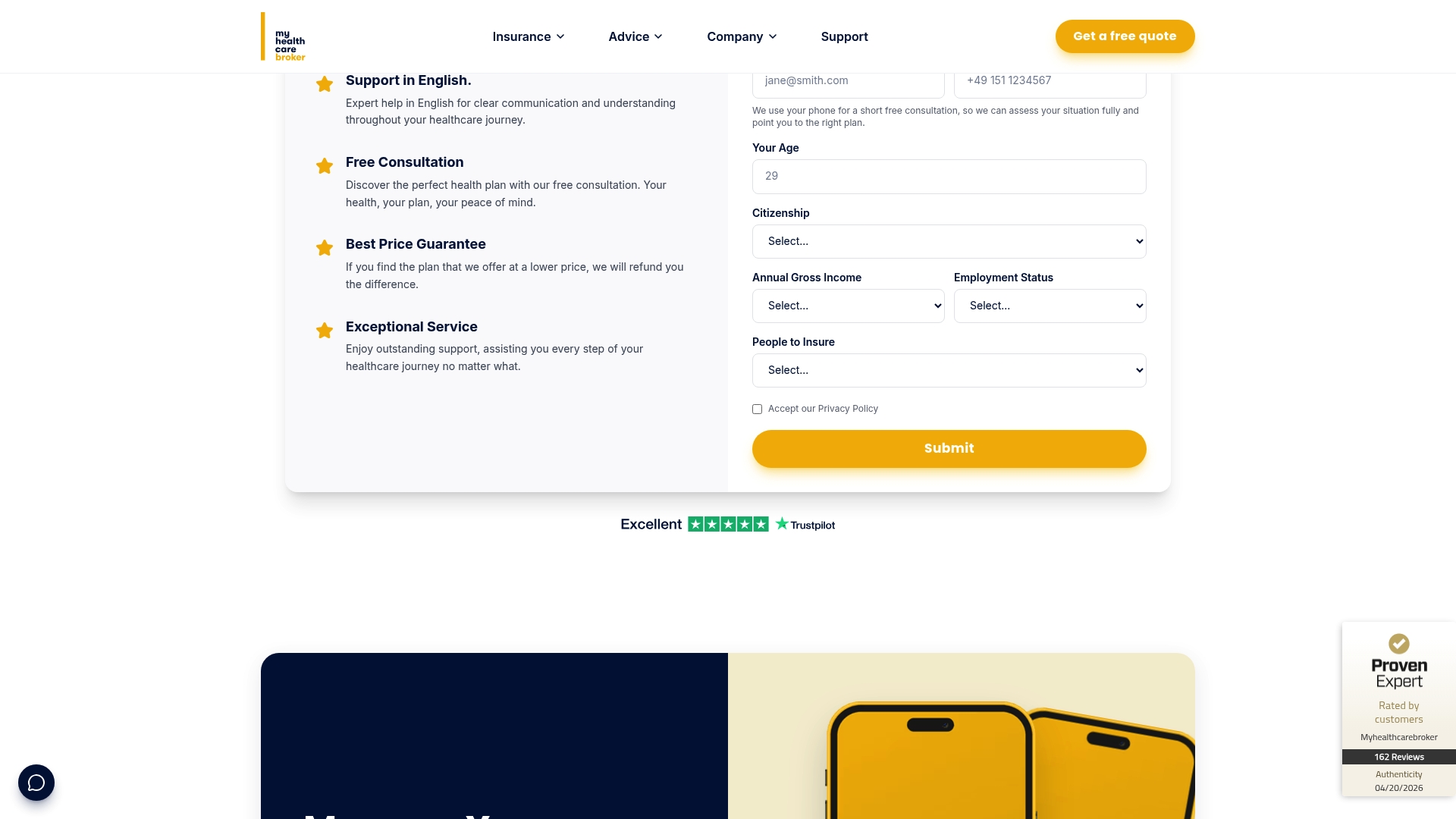
Whether you are deciding between public and private coverage, trying to understand how a pre-existing condition affects your options, or simply want a second opinion before signing, Myhealthcarebroker gives you the full picture without the sales pressure. Use the private health insurance calculator to get an initial sense of your costs, or speak directly with an advisor who will assess your situation and walk you through your real options.
Key Takeaways
Comparing health insurance in Germany requires understanding the GKV/PKV split, providing accurate personal data, and using multiple sources rather than relying on a single portal.
| Point | Details |
|---|---|
| GKV vs. PKV eligibility | Your employment type and income determine which system you can access before you compare anything. |
| Accurate data drives accurate quotes | Gross monthly salary, residency status, and employment type all directly affect the quotes you receive. |
| Portals show a partial market | Many comparison portals only list commission-paying insurers; always cross-check with direct insurer sites. |
| Pre-existing conditions matter in PKV | Private insurers underwrite health history; statutory insurance cannot refuse you on those grounds. |
| Myhealthcarebroker | Offers independent, English-language advice covering eligibility, plan comparison, and application support. |