
A private insurance premium refund is the reimbursement of unused premiums when a policy ends early or coverage changes before the term expires. For expats in Germany, understanding how premium refund private insurance works is not optional knowledge. It directly affects how much money you recover when you switch plans, relocate, or adjust your coverage. The refund amount depends on your contract terms, the reason for cancellation, and applicable legal timelines. Myhealthcarebroker works with expats daily to clarify exactly these kinds of details, in plain English, before they cost you money.
How are premium refunds calculated in private insurance policies?
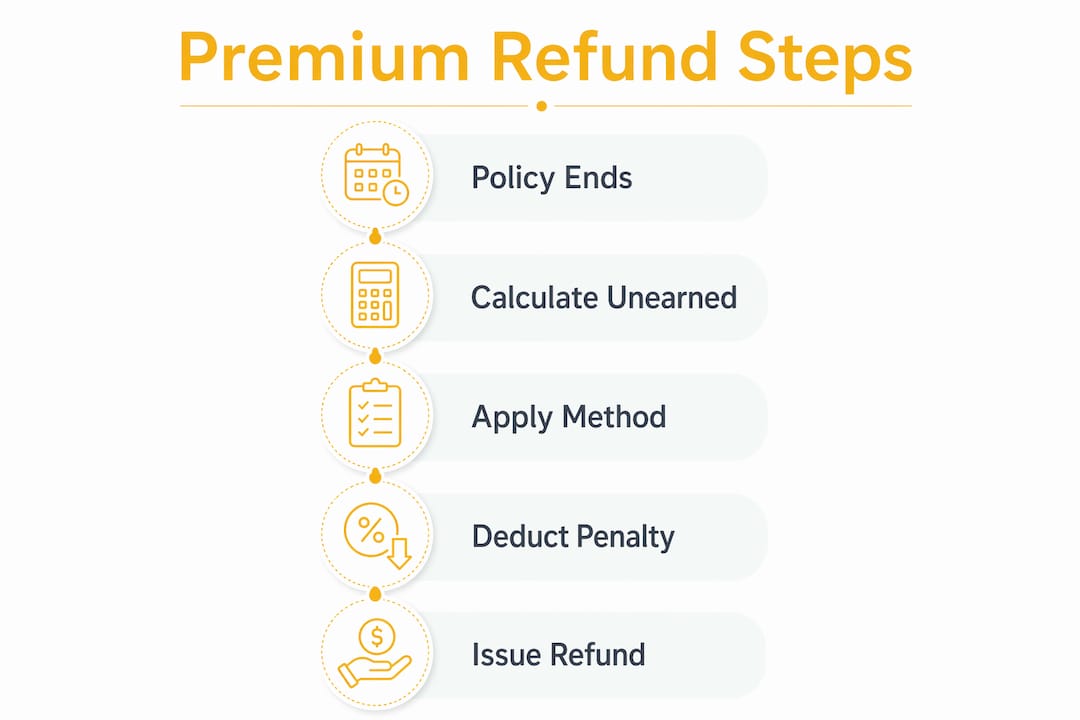
The refund calculation method determines how much of your unused premium you actually get back. Two methods dominate: pro-rata and short-rate. Knowing which one applies to your policy can mean a meaningful difference in your payout.
Pro-rata calculation returns a refund proportional to the exact number of unused coverage days. If you paid for 12 months and cancel after 3, you receive roughly 9/12 of your annual premium back. This method applies most often when the insurer cancels the policy or when a qualifying reason triggers the cancellation.

Short-rate calculation works differently. The insurer deducts a penalty before returning the unused portion. Short-rate penalties typically run around 10% of the unearned premium, and cancellation fees of $25–$50 are common on top of that. This method usually applies when you cancel voluntarily.
Here is a concrete example of why the distinction matters:
- You pay €2,400 for a 12-month policy.
- You cancel voluntarily after 3 months.
- The unearned premium for the remaining 9 months is €1,800.
- Under pro-rata, you receive €1,800 back.
- Under short-rate, the insurer deducts roughly 10%, returning about €1,620 instead.
The unearned premium is the mathematical value of unused coverage. The actual refund is that amount minus any contractually allowed fees or penalties. Those two numbers are not the same, and confusing them is one of the most common mistakes expats make.
Pro Tip: Request a written refund breakdown from your insurer before you cancel. Ask them to specify the calculation method, the unearned premium amount, and any deductions. This gives you a paper trail if the final refund does not match.
What legal rules and timelines govern premium refunds?
Legal timelines for refunds vary by jurisdiction, but the general framework is consistent. Insurers must issue refunds within 15 to 60 days depending on the type of policy and applicable state or regional law. Some jurisdictions allow up to 60 days for commercial lines, while personal policies often carry a tighter 15 to 45-day window.
Several rules shape how and when you receive your money:
- Voluntary vs. involuntary cancellation: Involuntary cancellations, where the insurer ends the policy, typically entitle you to a full pro-rata refund. Voluntary cancellations often trigger short-rate penalties.
- Free-look periods: All 50 U.S. states require free-look periods for life insurance, typically 10–30 days. Within this window, you can return the policy and receive a full refund with no penalty.
- Minimum earned premiums: Some policies specify a minimum amount the insurer keeps regardless of when you cancel. Read this clause carefully before signing.
- Refund calculation start date: Timing starts either from the insurer's receipt of your cancellation notice or the cancellation effective date, depending on the rules in your jurisdiction.
- Unclaimed refunds: If you do not claim your refund, insurers must transfer unclaimed funds to state unclaimed property databases after a dormancy period, typically 3 to 5 years.
If you move to Germany from another country and hold a private insurance policy from your home jurisdiction, the refund rules of that jurisdiction still apply to that policy. German private health insurance operates under its own regulatory framework. Mixing up these two systems is a common and costly mistake for expats.
For expats in Germany specifically, private health insurance contracts are governed by German insurance law. Refund terms appear in the cancellation provisions of your policy document. If your policy is written in German, Myhealthcarebroker can walk you through those clauses in English before you make any decisions.
What tax considerations should expats know about refunds?
The tax treatment of a premium refund depends entirely on how you paid the original premium. Refunds are taxable income if you previously deducted those premiums as a business or professional expense. If you paid with after-tax money and never claimed a deduction, the refund is generally a non-taxable return of capital.
Key points to keep in mind:
- Deducted premiums: If you claimed health insurance premiums as a tax deduction, any refund of those premiums is taxable in the year you receive it.
- Non-deducted premiums: Premiums paid from personal, after-tax income with no deduction claimed produce a non-taxable refund.
- Reporting thresholds: Significant refunds may trigger reporting requirements. The threshold varies by country and tax situation.
- Expat complexity: As an expat, you may have tax obligations in both Germany and your home country. A refund that is non-taxable in one jurisdiction may be taxable in the other.
Pro Tip: Before you cancel any policy that generated a tax deduction, consult a tax advisor who specializes in expat situations. Significant premium refunds carry tax implications that a general accountant may miss.
What common scenarios trigger premium refunds?
Several situations produce a private insurance premium refund, and knowing them helps you spot money you are owed. Policy cancellations, billing errors, and coverage adjustments are the three most common triggers.
The most frequent refund scenarios include:
- Mid-term cancellation: You cancel before the policy end date, either voluntarily or because you found better coverage. The insurer returns the unused portion, minus any applicable penalty.
- Coverage reduction: You drop a rider or reduce your benefit level mid-term. The insurer recalculates your premium and refunds the overpaid difference.
- Billing errors: You were charged incorrectly, perhaps due to a data entry mistake or a rate that was not updated after a qualifying life event. The insurer corrects the error and refunds the overcharge.
- Medical Loss Ratio rebates: Under federal rules in the U.S., insurers must spend a defined share of premiums on actual healthcare. MLR rebates totaled $1.64 billion in 2024. If your insurer falls below the required ratio, you receive a rebate automatically.
- Relocation or employer change: Expats who move between countries or change jobs mid-year often trigger policy cancellations that produce refunds.
To claim a refund effectively, follow these steps:
- Submit a written cancellation or adjustment request to your insurer.
- Specify the effective date and reason for the change.
- Request a written confirmation of the refund amount and calculation method.
- Follow up if the refund does not arrive within the legally required window.
Pro Tip: Review your insurance statements every quarter. Billing errors often go unnoticed for months, and the longer they run, the more complicated the correction becomes.
How does premium refund insurance add value for expats in Germany?
Premium refund features in private insurance create real financial flexibility, especially for expats whose circumstances change frequently. Standard policies that offer no refund on unused premiums lock you into a fixed cost regardless of what happens to your coverage needs.
| Feature | Standard private insurance | Refund-enabled private insurance |
|---|---|---|
| Unused premium recovery | No refund on early cancellation | Pro-rata or partial refund available |
| Flexibility on relocation | Premium lost if policy ends early | Refund softens the financial impact |
| Coverage adjustment | No financial credit for reductions | Overpaid premium returned |
| Cost efficiency | Fixed cost regardless of usage | Improved cost recovery on changes |
| Transparency | Cancellation terms vary widely | Refund method specified in contract |
For expats in Germany, private health insurance costs are a significant monthly expense. A policy with clear refund terms protects you if your employment status changes, your visa situation shifts, or you decide to switch providers after a better option becomes available. Policies without refund clauses can leave you absorbing the full cost of coverage you no longer need.
The eligibility rules for private health insurance in Germany also affect refund dynamics. If you become ineligible for private coverage mid-year and must switch to public insurance, a refund clause determines whether you recover any of the premium you already paid. That is not a hypothetical. It happens regularly to expats whose employment contracts change.
Key Takeaways
Premium refund private insurance returns unused premiums when a policy ends early, but the actual refund amount depends on the calculation method, contract terms, and applicable legal rules.
| Point | Details |
|---|---|
| Two calculation methods | Pro-rata returns the full unused share; short-rate deducts roughly 10% as a penalty on voluntary cancellations. |
| Legal refund timelines | Insurers must issue refunds within 15 to 60 days depending on jurisdiction and policy type. |
| Tax treatment varies | Refunds are taxable if the original premium was deducted; non-deducted premiums produce a non-taxable refund. |
| Common refund triggers | Cancellations, coverage reductions, billing errors, and MLR rebates all produce refunds you may be owed. |
| Refund clauses add value | Policies with clear refund terms protect expats from losing money during relocations or employment changes. |
What I've learned advising expats on premium refunds
Most expats I speak with assume that canceling a policy means losing whatever premium they have already paid for the remaining months. That assumption costs people real money. The refund right exists in most private insurance contracts. The problem is that nobody explains it clearly at the point of sale.
The second misunderstanding I see constantly is conflating the unearned premium with the refund amount. Those are two different figures. Your contract determines the gap between them. If you do not read the cancellation provisions before you sign, you are agreeing to terms you do not understand.
My honest advice: treat the refund clause as a core feature, not a footnote. When you are comparing private health insurance options in Germany, ask specifically how each policy handles mid-term cancellations and what calculation method applies. A policy that looks cheaper on monthly premiums can cost more overall if it offers no refund on early exit.
Expats in Germany also tend to underestimate how often their coverage situation changes. Job changes, visa renewals, and family additions all create moments where your current policy may no longer be the right fit. A policy with a clear, fair refund structure gives you the flexibility to act on those changes without absorbing a financial penalty.
— Marco
How Myhealthcarebroker helps you choose the right private plan
Choosing private health insurance in Germany involves more than comparing monthly premiums. Refund terms, cancellation clauses, and coverage flexibility all affect the real cost of a policy over time.
Myhealthcarebroker is an independent consultancy that advises expats in Germany on private health insurance options in plain English. The team compares plans across providers, explains refund and cancellation terms before you commit, and supports you through the full application process. You can use the premium calculator to estimate your costs, then speak with an advisor to understand exactly what happens to your premium if your situation changes. No jargon, no pressure, and no single insurer pushing their own product.
FAQ
What is a premium refund in private insurance?
A premium refund is the return of unused premiums when a policy ends before its term expires. The refund amount depends on the calculation method in your contract and the reason for cancellation.
How does the short-rate penalty affect my refund?
Short-rate penalties typically reduce your refund by around 10% of the unearned premium. This penalty applies when you cancel voluntarily, not when the insurer cancels the policy.
How long does an insurer have to issue a refund?
Insurers must issue refunds within 15 to 60 days, depending on the policy type and applicable jurisdiction. Failure to meet this deadline gives you grounds to file a formal complaint.
Are premium refunds taxable for expats in Germany?
Refunds are taxable if you previously deducted the original premiums as a business expense. If you paid with after-tax personal income and claimed no deduction, the refund is generally non-taxable.
What happens if I never claim my premium refund?
Unclaimed refunds are transferred to state or regional unclaimed property databases after a dormancy period of roughly 3 to 5 years. You can reclaim them through the relevant government database, but the process takes time.