
An independent insurance broker in Germany is the clearest path to health coverage that actually fits your situation. The German health insurance landscape is genuinely complex, with a very large number of licensed brokers and numerous insurers operating in the market. A broker cuts through that complexity because the law requires it: under § 34d GewO and § 59 VVG, a Versicherungsmakler (licensed independent broker) must act in your interest, not the insurer's.
Key reasons to use an insurance broker in Germany for health insurance:
- Legal fiduciary duty. Brokers are legally defined as a sachverständiger Treuhänder (fiduciary trustee) for you, not for any insurance company.
- Market survey obligation. Before recommending any policy, a broker must conduct a thorough Marktuntersuchung (market survey) across available providers.
- Documented consultation. Every substantive consultation must be recorded in writing (Beratungsdokumentation), giving you a legal record if advice turns out to be wrong.
- Claims support. Brokers handle communication and paperwork with insurers during claims, so you don't have to manage that process alone.
Table of Contents
- Why use an insurance broker in Germany: the legal framework
- Key benefits of using a broker for health insurance in Germany
- When direct purchase works and when it doesn't
- How Myhealthcarebroker supports expatriates with German health insurance
- Potential limitations and conflicts of interest to know about
- Questions to ask a broker before you commit
- How to choose the right insurance broker in Germany
- How to work effectively with a broker during health insurance selection
- Public vs. private health insurance in Germany: how brokers help you navigate both
- Myhealthcarebroker makes private health insurance in Germany straightforward
- Key Takeaways
Why use an insurance broker in Germany: the legal framework
A Versicherungsmakler operates under a distinct legal framework that sets them apart from every other type of insurance intermediary. Under § 59 VVG, a broker's obligation runs to you, not to any insurer. The Bundesgerichtshof (Germany's Federal Court of Justice) has repeatedly described the Makler as a fiduciary trustee for the client, and that status carries real consequences.
- Civil liability for negligent advice. A broker is liable under § 280 BGB if their recommendation causes you financial harm.
- Mandatory market survey. They must survey the market before recommending any product, not just present what pays the best commission.
- Public registration. Every licensed broker must be registered in the IHK broker registry at vermittlerregister.info.
- Written consultation record. The Beratungsdokumentation captures your stated needs, the options reviewed, and the reasoning behind the recommendation.
A Versicherungsvertreter (tied agent) works on the opposite side of the table. They represent one insurer or a limited panel and are primarily accountable to those companies. The first question to ask any "insurance advisor" in Germany: are you a Makler or a Vertreter? That answer shapes every recommendation they give you.
Key benefits of using a broker for health insurance in Germany
Private health insurance (PKV) in Germany involves a wide variety of insurers offering many different tariffs. Nobody evaluates that market alone in a reasonable amount of time, which is why broker market access matters so much for PKV decisions.
- Internal tariff access. Brokers can navigate Tarifwechsel (tariff switches) within an insurer, saving you money without requiring a full provider change. This is a process most consumers cannot manage independently.
- Anonymous risk pre-screening. For clients with complex medical histories, brokers submit anonymized Risikovoranfragen (risk pre-inquiries) across multiple insurers before you commit to any application.
- Long-term claims support. When a claim gets complicated, your broker handles insurer communication and documentation, not you.
- No extra cost to you. Broker commissions are paid by insurers, and for PKV products, distribution costs are built into the premium regardless of sales channel. Using a broker does not raise your premium.
Pro Tip: Always request your copy of the Beratungsdokumentation after every broker consultation. You are legally entitled to it, and it is your primary protection if a recommended tariff later proves unsuitable for your needs.
When direct purchase works and when it doesn't
Direct insurers sell policies online or by phone without intermediaries, saving on distribution costs, which may be reflected in lower premiums. For straightforward products, that trade-off can make sense.
- Direct purchase works well for: simple supplementary coverage like dental add-ons (Zahnzusatz) to statutory health insurance, where the product is standardized and price is the main variable.
- Broker guidance is strongly recommended for: comprehensive PKV decisions, life event triggers (new job, marriage, return from abroad), or any situation involving a complex medical history.
- What direct insurers cannot offer: a cross-market comparison, internal tariff optimization, or independent advocacy during a disputed claim.
The trade-off is straightforward. Lower premiums from direct purchase come with less personalized advice and no independent advocate when things go wrong.
How Myhealthcarebroker supports expatriates with German health insurance
Myhealthcarebroker is an independent consultancy built specifically for people living and working in Germany who need private health insurance advice in clear English. As a licensed Versicherungsmakler, Myhealthcarebroker carries the same legal duties described above: fiduciary obligation to the client, mandatory market survey, and full consultation documentation.
- English-language advice from start to finish. No German required, no jargon.
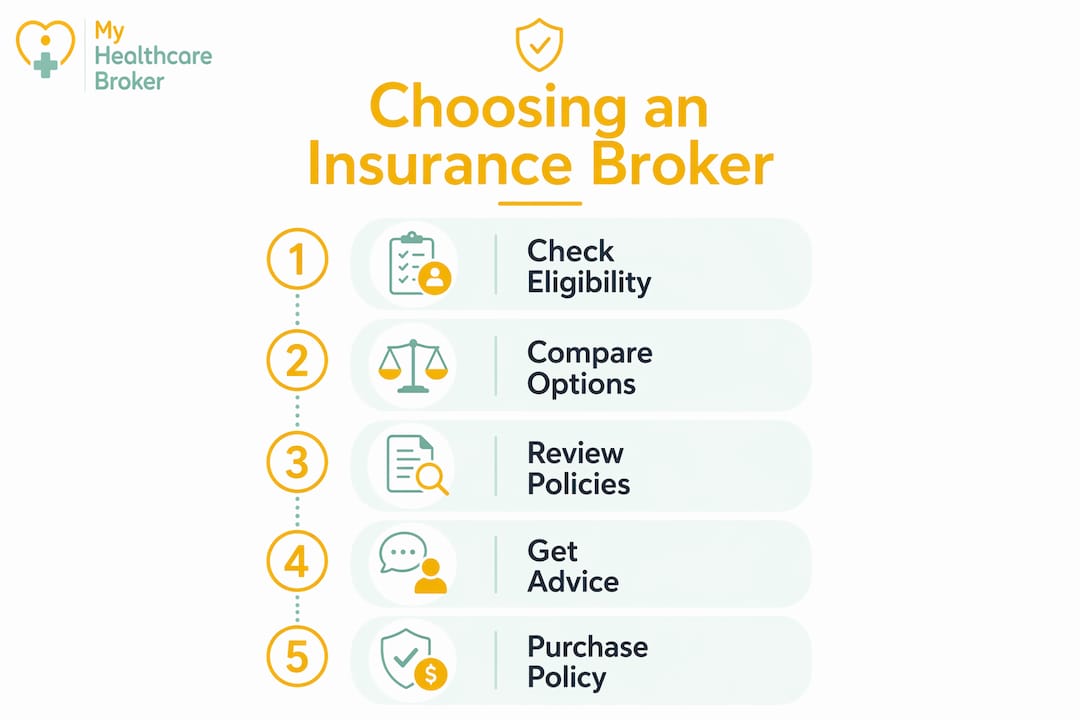
- Full process support. From eligibility check through application and ongoing policy adjustments.
- Access to the private health insurance market across providers, including PKV tariff comparisons and optimization.
- Legal protection through documented consultations at every stage.
Statutory health insurance contributions have risen again in 2026, making independent comparison more valuable than ever for anyone weighing PKV against public coverage.
Potential limitations and conflicts of interest to know about

Commission-based pay creates a structural tension worth understanding. A broker earns when you sign a policy, which means an unqualified or poorly motivated broker might favor products with higher commissions over those that genuinely fit your needs. Germany's legal framework addresses this directly through the fiduciary duty and liability rules described earlier, but the framework only works if your broker is actually licensed and registered.
Verify any broker's registration at vermittlerregister.info before sharing personal or medical information. Also recognize that a broker specializing in health insurance may have limited expertise in other coverage types. Ask directly what they handle most and whether they have experience with non-German clients.
Questions to ask a broker before you commit
- Are you a licensed Versicherungsmakler registered under § 34d GewO?
- How many PKV providers do you actively compare?
- Do you handle Tarifwechsel and Beitragsanpassung (premium adjustment) situations?
- Will you provide a written Beratungsdokumentation after our consultation?
- How do you handle claims support if a dispute arises?
- Do you have experience advising expatriates or non-German speakers?
How to choose the right insurance broker in Germany
Licensing is the baseline. Beyond that, look for a broker with demonstrated PKV expertise, experience with expat clients, and a clear process for ongoing support after the initial policy is placed. A broker who only helps you sign up and then disappears offers far less value than one who reviews your tariff annually and flags when a Tarifwechsel would save you money.
Language matters too. If your German is limited, a broker who advises in English removes a real source of error from the process.
How to work effectively with a broker during health insurance selection
- Prepare your situation clearly. Employment status, income, health history, and any dependents all affect which options are available to you.
- Request an eligibility check first. Not everyone qualifies for PKV. Confirm your status before comparing tariffs.
- Review the market survey output. Ask your broker to walk you through the options they considered and why they narrowed to their recommendation.
- Read the Beratungsdokumentation before signing anything. Confirm it accurately reflects your stated needs and the advice given.
- Set expectations for ongoing contact. Agree upfront on how often your coverage will be reviewed and how to reach your broker when a claim arises.
Public vs. private health insurance in Germany: how brokers help you navigate both
Germany operates two parallel health insurance systems. Gesetzliche Krankenversicherung (GKV, statutory health insurance) covers most employees automatically, with contributions set by law and shared between employer and employee. A large number of GKV providers operate in Germany, though their benefit structures are largely standardized by regulation.
Private Krankenversicherung (PKV) is available to employees earning above the annual income threshold, the self-employed, civil servants (Beamte), and some students. PKV premiums and benefits vary significantly across providers and tariffs. A broker's value is minimal for GKV selection since contributions are legally standardized. For PKV, an independent broker is close to essential given the market complexity involved.
Myhealthcarebroker makes private health insurance in Germany straightforward
Choosing private health insurance in Germany as an expatriate means navigating a German-language market with binding long-term consequences. Myhealthcarebroker removes that friction entirely.
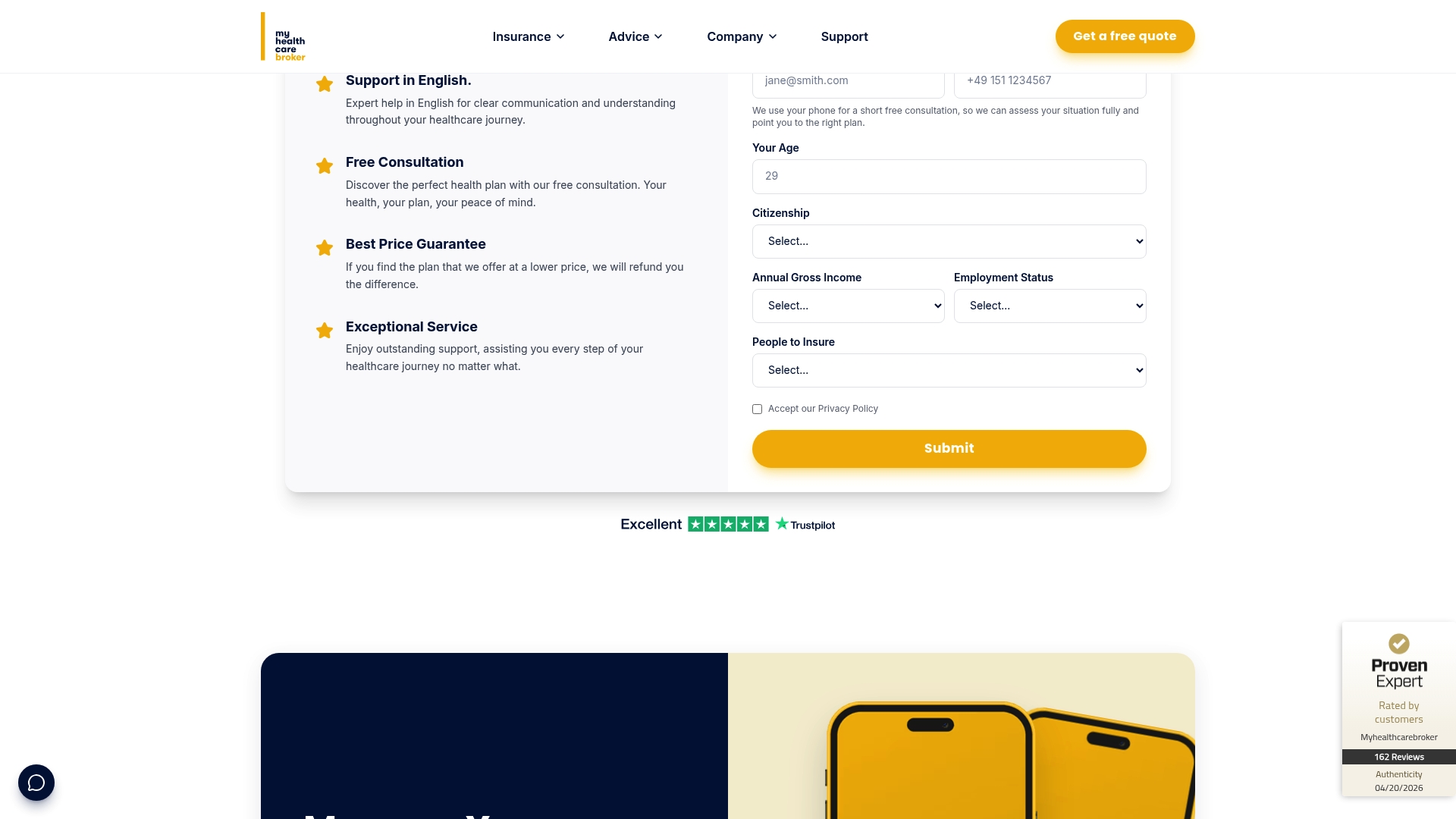
As a licensed independent broker, Myhealthcarebroker compares private health insurance options across the market, advises in plain English, and stays with you through every stage from the first eligibility check to ongoing claims support. There are no hidden fees and no pressure toward any single provider. The consultation is documented, the advice is legally accountable, and the process is designed for people who did not grow up in the German system.
Start with an eligibility check to confirm whether PKV is the right path for your situation, then let Myhealthcarebroker do the market survey that the law requires and that genuinely takes expertise to do well.
Key Takeaways
An independent insurance broker in Germany is legally required to act in your interest, survey the market, and document every consultation, making broker guidance especially valuable for private health insurance decisions.
| Point | Details |
|---|---|
| Legal fiduciary duty | Brokers are bound by § 34d GewO and § 59 VVG to act in your interest, not the insurer's. |
| Market scale | — |
| No extra cost | Broker commissions are paid by insurers; using a broker does not raise your PKV premium. |
| Direct purchase limits | Direct insurers save on distribution costs but cannot offer cross-market comparison or claims advocacy. |
| Myhealthcarebroker | An independent, English-language broker covering the full PKV market, from eligibility check to ongoing support. |